
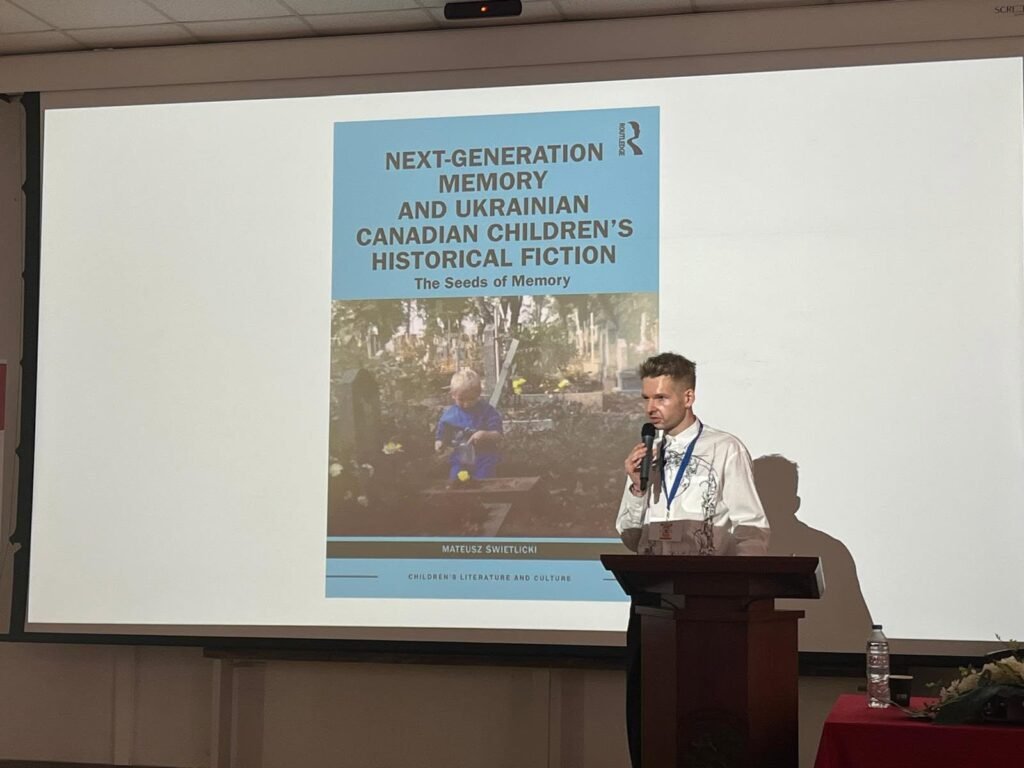
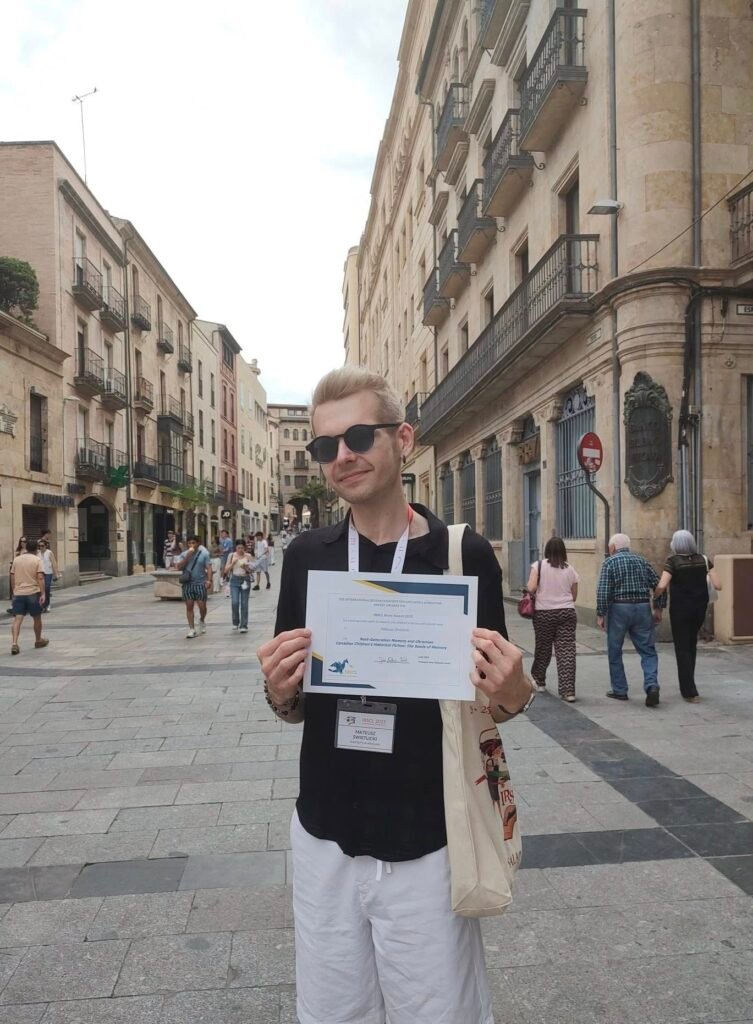
Dr. Mateusz Świetlicki is Associate Professor in the Department of American Literature and Culture at the Institute of English Studies, University of Wrocław, where he also serves as Director of the Center for Young People’s Literature and Culture. He is Vice-Dean for Student Affairs and Extramural Teaching at the Faculty of Languages, Literatures, and Cultures and a co-founder of the Center for Research on Children’s and Young Adult Literature. As a scholar of children’s and young adult literature, memory studies, and popular culture, Dr. Świetlicki has authored more than one hundred scholarly publications, including several monographs and numerous articles published in international academic journals. His latest book, Next-Generation Memory and Ukrainian Canadian Children’s Historical Fiction: The Seeds of Memory (Routledge 2023) has won the 2025 book award for best monograph from the International Research Society for Children’s Literature.
We are thrilled and honored to share Dr. Świetlicki’s ideas with you.
- Could you please tell us a little about yourself? What would you like to share about your background and early experiences with reading and literature? What is your favorite childhood memory connected to books or reading? Do you or did you have a favorite book? What made it special?
Thank you for the invitation; it’s a great honor! I am a very private person and rarely talk about myself or my life, but I will gladly answer your questions. To quote one of my favorite childhood songs, Cher’s “Just Like Jesse James,” I have always been “a small-town dude with a big-city attitude.” Although I have lived my entire adult life in big cities (mostly Wrocław), I was born in Głubczyce, a small town near the Polish-Czech border (where Stefanie Zweig, a well-known German author of mainstream and children’s literature, was born in 1932). It is a place with a complex history, like most of Central and Eastern Europe, a place that shaped me and influenced me as a person and as a scholar, even at times when I no longer wanted to be influenced by it. I plan to discuss it further during my keynote at this year’s The Child and the Book conference in Crete.[1] I attended school there and fell in love with reading. My early favorite books were Maria Krüger’s Karolcia (1959), Janusz Korczak’s King Matt the First (1923), Frances Hodgson Burnett’s The Secret Garden (1911), and, of course, L. M. Montgomery’s Anne of Green Gables (1908). As I write in the preface to my Next-Generation Memory and Ukrainian Canadian Children’s Historical Fiction: The Seeds of Memory (Routledge, 2023), the experience of reading Montgomery’s Anne for the first time is one of my most vivid childhood memories: “It was summertime, and I read it on my sofa, eating fresh strawberries. The book still has some crimson strawberry stains on it. I spent that summer reading all the other Anne books, and since then, I have read them numerous times” (xi). Anne, a Canadian rebel with exceptional imagination, an outsider who “made it,” later a teacher and a mother, a person always full of faith, hope, and kindness, but also anxiety, doubts, and insecurity, has never left me. I have written extensively about Canadian literature, otherness, diaspora, migration, history, trauma, memory, and the unquenchable thirst to find roots and to navigate one’s own multilayered identity – themes I further explore in my current book project.
2. What did you want to be when you grew up? When did you realize you wanted to go into the field of Children’s and Young Adult Literature? How would you describe our field?
I have always been inquisitive and interested in many things. In addition to reading and learning languages, I played instruments, sang in a local choir, acted in theater groups, participated in church events, was an active scout, and did many other artsy things as a child. Together with some of my close friends, I even tended old, abandoned graves at the local cemetery. I was also passionate about botany, so in high school I was in a science-focused class. Early on, I began tutoring some of my neighbors in English and Polish. Looking back, I believe I somehow became a teacher instinctively well before deciding to earn a degree in teaching. In addition to my supportive family, I had many wonderful teachers who not only made me fall in love with reading and learning English but also made me want to become an educator, even though none of my parents or grandparents are professors. I will always be grateful to the people and schools that built me.
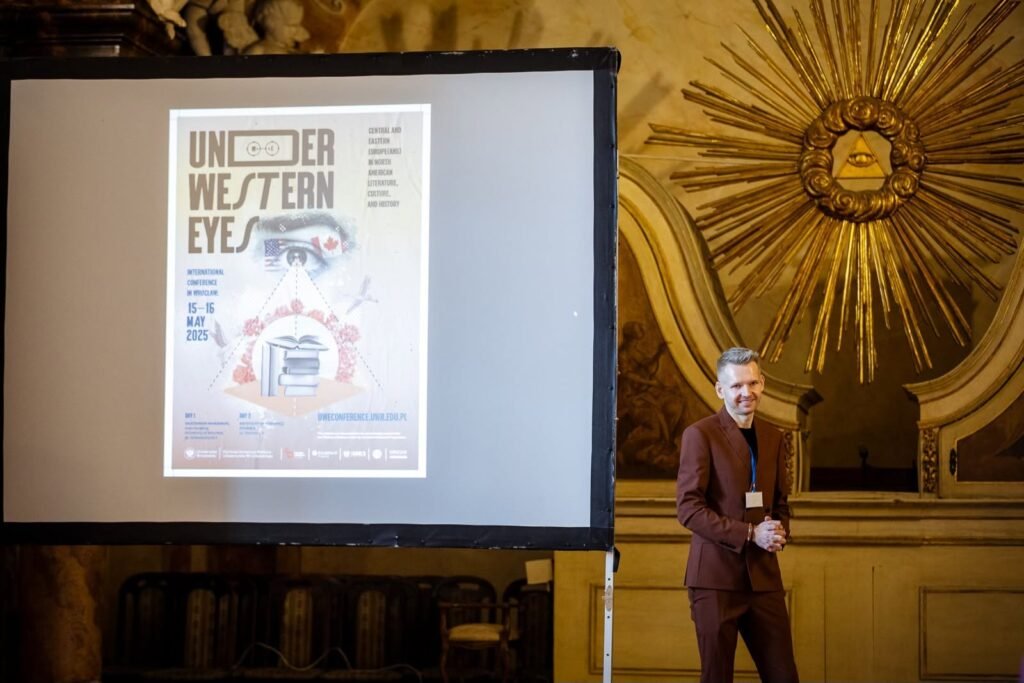
Children’s literature and representations of children in literature and culture have always been present in my work. Even my A-levels project was on representations of children and childhood in literature, film, and art. During my university studies, I took several inspiring classes on children’s literature and culture taught by brilliant professors. My MA dissertation was on queer children in 20th-century American literature. I also wrote another one, a comparative analysis of James Joyce’s Ulysses and Yuri Andrukhovych’s The Moscoviad. I have no professors or scholars in my immediate family, so my decision to stay in academia was driven by my curiosity and my supervisor, Prof. Agnieszka Matusiak’s, confidence in me. My PhD dissertation was not about children’s literature. Instead, I focused on masculinity, boyhood, and coming of age. I was still a student when I joined the Center for Young People’s Literature and Culture at the Institute of English Studies (founded by Dr. Marek Oziewicz and Dr. Justyna Deszcz-Tryhubczak). I have to say it was an important moment in my career because I was introduced to wonderful people and inspiring ideas. Colleagues from the Center made me realize that exploring literature for young readers was possible. Indisputably, Justyna Deszcz-Tryhubczak’s support influenced the development of my PhD project. I have not left the field since then, and I am sure I would not be where I am now without the encouragement I received.
To be honest, your seemingly simple question about our field is actually a difficult one to answer because currently children’s and young adult studies is so diverse, with scholars adopting a variety of approaches and sensitivities. Thus, I can’t describe it properly in a few sentences. When I began my career, there were significantly fewer journals, book series, and study/research programs. Many of them seemed beyond reach for a Polish scholar working on transcultural topics. Currently, many universities offer courses and programs in children’s literature (a special shout-out to the exceptional Erasmus Mundus International Master: Children’s Literature, Media & Cultural Entrepreneurship, CLMCE – earlier Children’s Literature, Media and Culture, CLMC). Our local journals have become global, for instance, Filoteknos, which recently celebrated its 15th anniversary (another shout-out to the editor-in-chief, my dear friend Dorota Michułka). Thanks to the internet, it is possible to access sources and meet international scholars without leaving one’s country (or even one’s small town!). We don’t have to look far: students and researchers from all around the world can participate in the International Voices in Children’s Literature Studies series organized by the Centre for Research on Children’s and Young Adult Literature at the University of Wrocław, an exceptional community of scholars I am a part of (of course, here is another shout-out to the team of the Centre).
Despite all the advantages of the internet, nothing can replace in-person interactions. Throughout the years, I have met many inspiring people at conferences and seminars. I am glad to be a member of the International Research Society for Children’s Literature and a co-chair (with Svetlana Efimova) of the ASEEES Working Group Childhood in Eastern Europe, Eurasia, and Russia (ChEEER) because they help me stay informed about current developments in the field. I continue to be impressed with the quality and quantity of the new publications, research projects, and MA and PhD programs from around the world.
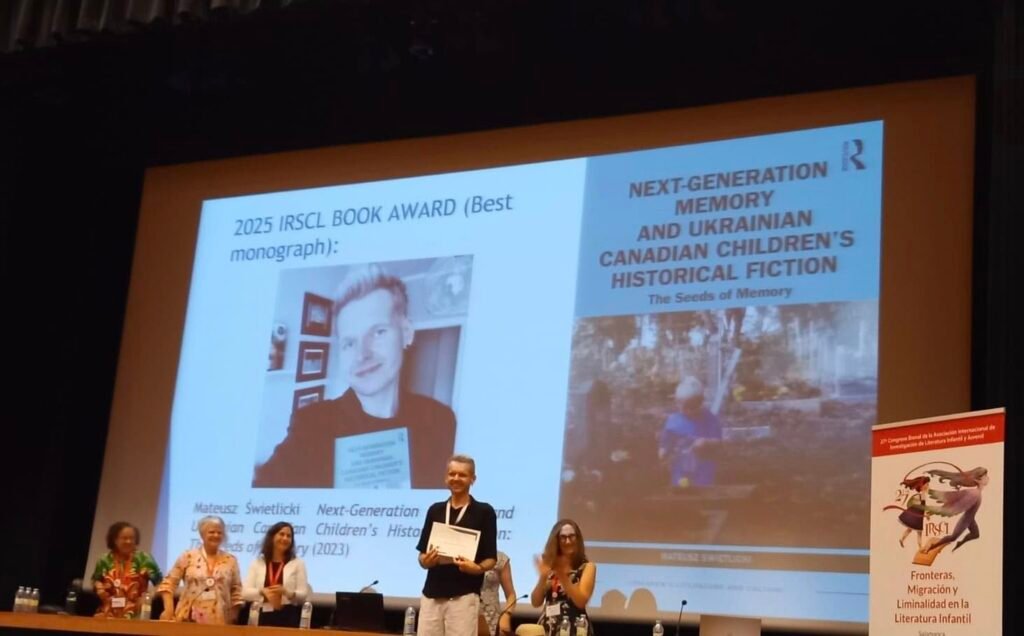
3. Congratulations on winning the 2025 book award for best monograph from the International Research Society for Children’s Literature for Next-Generation Memory and Ukrainian Canadian Children’s Historical Fiction. The Seeds of Memory! Can you tell our readers a bit about the process of developing this book? How was the experience compared to publishing other works?
Thank you! It’s been almost a year, and I still cannot believe I won. This award means a lot to me for several reasons. It was awarded by a community of the world’s greatest specialists in children’s and young adult literature, which made me feel validated and showed me that there is scholarly interest in my interdisciplinary and transcultural research. I am glad the book has received many positive reviews from critics, authors, and casual readers. While I am not Ukrainian Canadian, Next-Generation Memory and Ukrainian Canadian Children’s Historical Fiction. The Seeds of Memory is a personal book rooted in family history and many of my scholarly interests: Canada, Ukraine, children’s literature, memory studies, and history. You asked about the process of developing the book. I want to begin by saying that my experience with Routledge’s team, especially Elizabeth Marshall and Kenneth Kidd – the editors of the Children’s Literature and Culture series – was great. I am glad the editors and reviewers liked my vision and that the book could be published in this particular series.
Everyone who has ever worked with me knows that I write rather fast, but gathering thoughts takes me ages. I started collecting sources for this project during a Fulbright fellowship in Chicago and spent a few years developing the corpus and the main line of argument. I wrote early drafts of two chapters while teaching at the University of Wrocław, but I had limited access to rare Canadian books, archival sources, and expensive publications. Luckily, I was blessed to hold research fellowships in Germany (International Youth Library in Munich), the USA (University of Florida), and Canada (University of Toronto) – I wrote most of the book there. I was fortunate to consult with exceptional scholars and get in touch with some of the authors whose work I discuss (including Marsha Forchuk Skrypuch and Gabriele Goldstone, two of the finest authors of historical fiction whose work I recommend reading). Throughout my career, I have worked with hundreds of international students and collaborated with scholars from various countries and fields – all of whom have influenced my way of thinking and my view of the world. I cannot list everyone I am grateful to, but I did thank most of them in the acknowledgments in my Next-Generation Memory. However, I want to highlight the support of Anastasia Ulanowicz, whose book on second-generation memory played a key role in developing my project. She was my mentor when I held a Kosciuszko Foundation fellowship in Gainesville, Florida. Collaborating with her on another project, our Fieldwork in Ukrainian Children’s Literature (Routledge, 2025) collection was pure pleasure.
When the final draft of Next-Generation Memory was ready, Russia’s invasion of Ukraine happened. Although my monograph is on Canada, Anglophone books, and the Ukrainian diaspora, the ongoing Russia-Ukraine war shaped its final version. I felt that I had a platform and a responsibility to highlight the links between the past and the present. The war also influenced the writings of Ukrainian Canadian authors, most notably Marsha Forchuk Skrypuch, who has recently published the Kidnapped from Ukraine trilogy (highly recommended!).
Knowing what I know now, I would have written the book differently. Still, I am proud of this project despite its flaws. I believe the metaphor of books as seeds of memory is powerful and might resonate not only with scholars of memory and diasporas. Now that the monograph has been out for a few years, this metaphor continues to resonate with me and my work. The seed has sprouted, because in my current project on young adult literature, I focus on roots, splinters, and liminal identities.
4. You have an amazing scholarly output, received many awards and have many diverse research experiences, can you tell our readers about some of those experiences and how have they impacted/influenced/enriched you as a person and professional?
Thank you for your kind words! Like my family history, hometown, and travels, my university education (American Studies and Slavic Studies) has shaped me and my research. I have published extensively on Canadian, American, Ukrainian, and Polish children’s and young adult literature, as well as on mainstream literature. My expertise extends beyond memory and historical fiction, with numerous publications on other topics, most notably queerness, masculinity, and popular culture – my greatest love. To be honest, I would love to spend more time researching popular culture, especially since I have taught a variety of classes on film, music videos, and the entanglements between literature and the arts. I am impressed with scholars like Elly McCausland, who in her (exceptional!) work manages to navigate between children’s literature and Taylor Swift.
As you have noted, I have won a few awards and have held many fellowships. I have presented at countless conferences and given guest talks in North America and across Europe. However, instead of listing my achievements and talking about my successes, I want to say a few words about failure and disappointment, something rarely acknowledged in academia. For example, in a month, I will be giving a keynote talk at a major conference, but a few weeks ago, a panel I submitted with two other established US-based scholars was rejected by the organizers of a small conference because they received too many submissions and didn’t like ours. We cannot always win, and we should learn how to embrace such experiences and learn from them. We also should not compare ourselves to others, as we do not know their struggles or the sacrifices they have made. I won the prestigious IRSCL award, but weeks before that, I had not won a local, non-field-related award. I also did not win an award for which I was nominated in Canada. I could reflect on the reasons I didn’t win, scrutinize my work, and feed my resentment, but the truth is that there are many great books that deserve acclaim, and the committees look for diverse voices. I’m happy for the winners whose hard work was acknowledged. I am also happy for the researchers who will be presenting their work at the aforementioned conference. As Taylor Swift sings in “We Need to Calm Down” – “We all know now we all got crowns.” The same thing can be said about fellowships and job positions – sometimes you get them, other times you don’t. Either way, you should stay humble.
Another experience that enriched me is connected to publishing. I have written more than 100 publications, and my articles have appeared in such great journals as Children’s Literature in Education, Children’s Literature Association Quarterly, Bookbird, International Research on Children’s Literature, and Barnboken, as well as in several edited collections, including the Routledge Companion to Children’s Literature and Culture. I co-edited several books and journal issues, and I am currently working on four edited volumes and a new monograph. However, I have received contradictory or dismissive reviews of my articles more than once. Sometimes reviews, even those critical, can be helpful and inspirational. They have inspired me to rethink the original ideas and arguments. To dust myself off and try again. Many years ago, my article, which was initially rejected by a certain journal for being “too ethnic for a mainstream outlet,” was later completely revised and published elsewhere, earning strong reviews. I consider it one of the best things I have ever written. The editor of another Canadian journal kept asking me for major revisions on a different essay, one I was quite happy with. I continued reworking it, losing my voice and vision in the process. But the editor remained unsatisfied with my changes and eventually rejected the essay. It was a lesson to listen to my voice and my vision. The initial version of that essay was published elsewhere without issue. These experiences made me a better writer, editor, and more understanding reviewer. They also taught me how to accept feedback. I review a lot (typically, I only say no to reviewing when I have too many deadlines), and I always provide constructive criticism that is kind and encouraging. I believe there is a thin line between being critical and condescending. Unfortunately, some reviewers can be not only disdainful but also Western-centric at times, and forget that not everyone has the same access to sources and that non-Anglophone sources are important too. I encourage my international graduate students to draw on the work of scholars from their cultures and to introduce Western readers to the voices of brilliant people who do not write in English.
5. What suggestions do you have for scholars who are just coming into the field and those who are still in the early part of their careers?
This question is connected to what I have just said. My suggestions are simple, but they come from years of experience. What a shame I didn’t realize back then what I know now! Set your boundaries and remember that work should never dominate your life. A few years ago, I had to leave a project I was passionate about because someone involved in it was treating me in a way that negatively affected my personal life, health, and mental well-being. It was not worth it. Resigning was one of the best decisions I’ve ever made – even though I missed several great opportunities. Finding the right balance can be difficult, and in the process, you’ll make mistakes, but it is worth trying. Another thing I have realized is that you should always listen to your instincts. Be curious, persistent, and understanding. Read widely and do your research (make sure you encounter a range of perspectives and positions), but try to find your own voice and believe in it. Learn to accept constructive feedback, even if it means rethinking your ideas. I understand that fashions change and different topics come in and out of style, but only say or write things you genuinely believe should be said or written—especially if they haven’t been expressed before. Finally, remember that integrity is essential in both professional and personal situations. You can’t control how others feel or believe – but you can control how you behave. Whether you’re talking to a child, an adult, a graduate student, an esteemed scholar, or a janitor, treat everyone with the same respect and kindness.
6. As for our last question, what’s the message you’d like to give the whole world?
What a difficult question! I am probably not qualified to advise the world, but I can share a message – or a few. First, after all is said and done, only kindness and compassion matter. I feel privileged to be working at the University of Wrocław’s Faculty of Languages, Literatures and Cultures, where I serve as Vice-Dean for Student Affairs and Extramural Teaching and as Associate Professor at the Institute of English Studies. I am surrounded by many exceptional people, and I wish all scholars could have the chance to work in such a friendly and supportive environment. We will be remembered for our actions or inactions. Let others be who they want to be and treat them the way you would like to be treated. You do not always have to understand people – there is no need, let them be. Second, in the 21st century, all wars and military conflicts are global, affecting all children. Traumas and genocides should not be competitive. Learn history and teach it without simplified, melodramatic binaries. I often think about a quote from Janice Kulyk Keefer’s Honey and Ashes: “Perhaps there’s no such thing as a true story, just the echoes between different versions, and the desire to know, that keeps us speaking, and listening, at all” (62). We need to think about the links between the past and the present as multidirectional and nuanced. As Michael Rothberg argues, most of us are “implicated subjects” – we may not cause harm directly, but we are implicated in the actions of our governments; that is why we cannot remain passive and look back when we see atrocities. Sometimes we all feel hopeless, but as scholars and educators, we have a responsibility and plenty of opportunities. Read historical fiction about various countries, cultures, conflicts, and genocides, and recommend such books to young people. Help them better understand the connections between the present and the past and between various countries and cultures. Let me use examples I have written about: learn about the Holodomor and the Armenian Genocide (I recommend Marsha Forchuk Skrypuch’s books about these genocides) and incorporate them in your syllabi. If a student or colleague tells you something is offensive and harmful, listen to them and consider why. I could go on and on. Instead, I will add one more thing: take care of this planet and celebrate the little things in life. There is nothing more precious.
Thanks a lot for your time and patience, Dr. Świetlicki!
Interview conducted by: Dr. Johari Murray and Dr. Neda Farnia
CooterMag
[1] The Child and the Book conference took place on May 29–31, 2026 at the University of Crete’s Gallos Campus in Rethymnon, Greece. This year’s conference focused on children’s literature exploring themes of diaspora, exile, and nomads. (Editors)