
A Memory Hides Behind the Mask
It leaps out
from the depths of darkness.
You do not recognize it.
Pain,
longing,
loss,
love,
emptiness.
And when,
on the threshold between forgetting and remembering,
you gnaw at your hands,
its truth
burrows deep
into the unknown depths of your being.
— Sepideh Taghizadeh
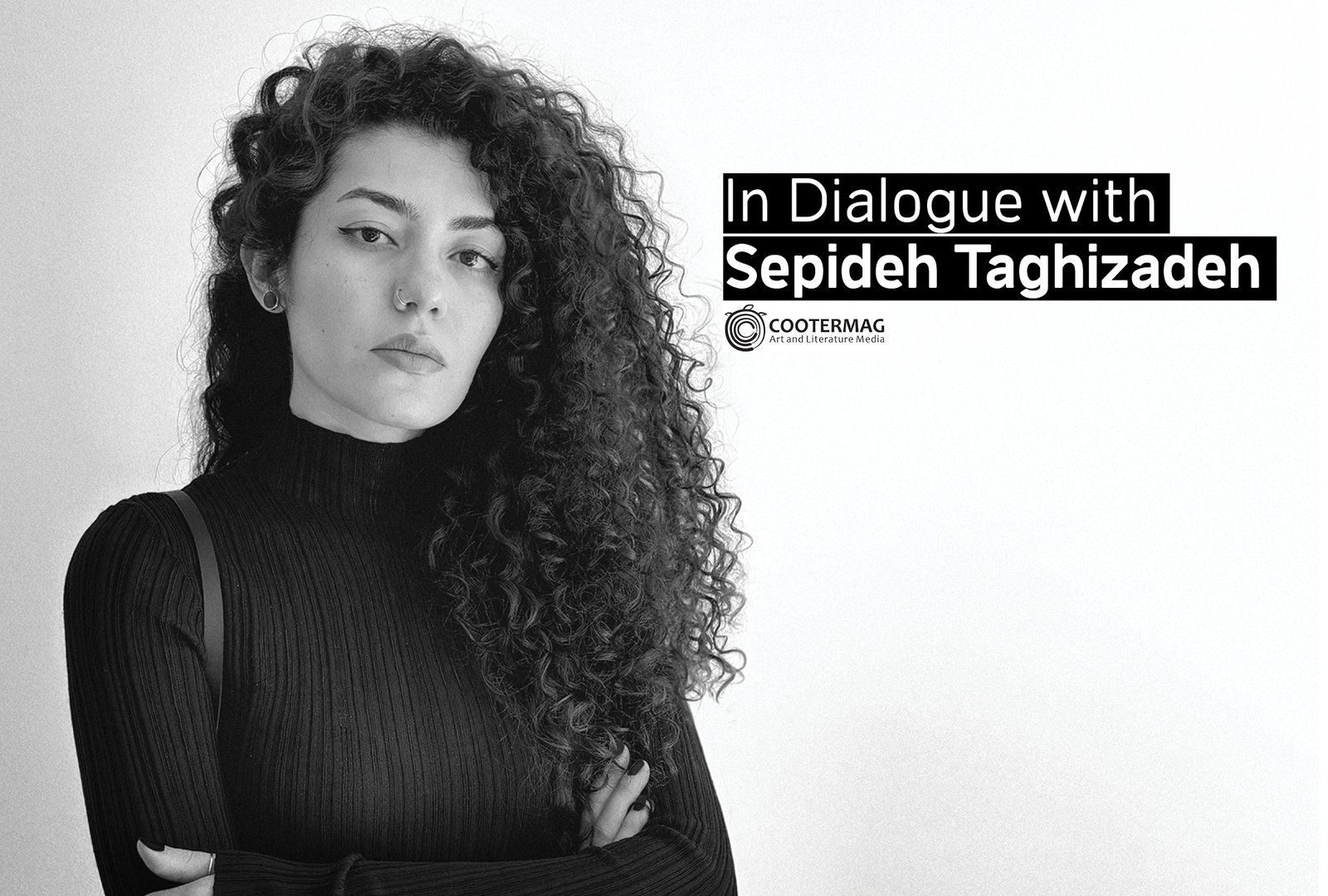
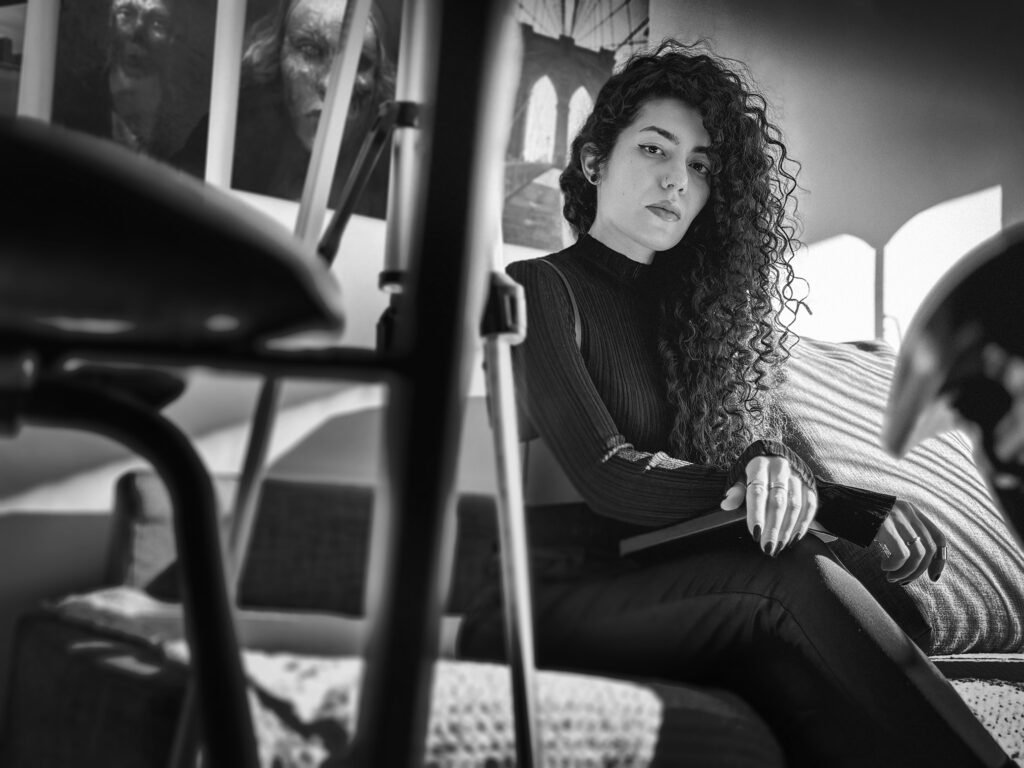
Sepideh Taghizadeh is a visual artist based in Hungary. For nearly a decade, she has been developing her artistic practice in digital painting, exploring the boundaries between reality, memory, and imagination. Her current series of psychological portraits, influenced by dark surrealism, examines how memory, suffering, and lived experience shape human identity. Through transformed faces and layered imagery, her work explores the complex relationship between outward appearance and inner life.
In this interview, we speak with Taghizadeh about the ideas and experiences behind her work, her distinctive visual language, and her reflections on identity, suffering, and the human condition.
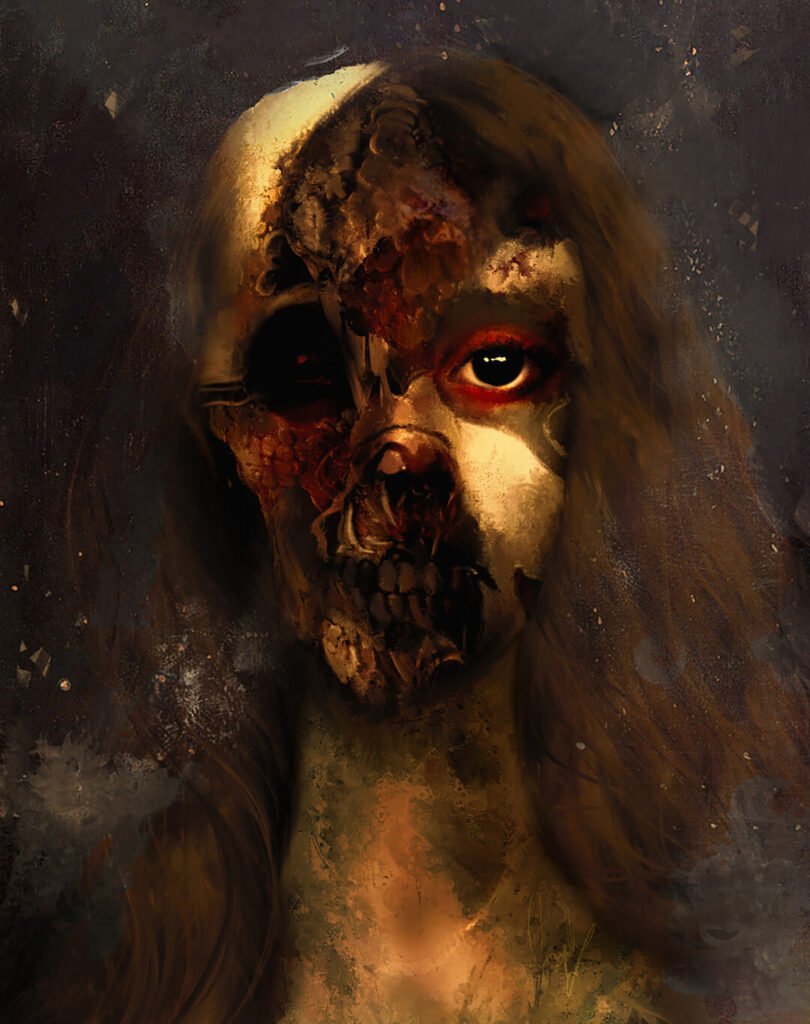
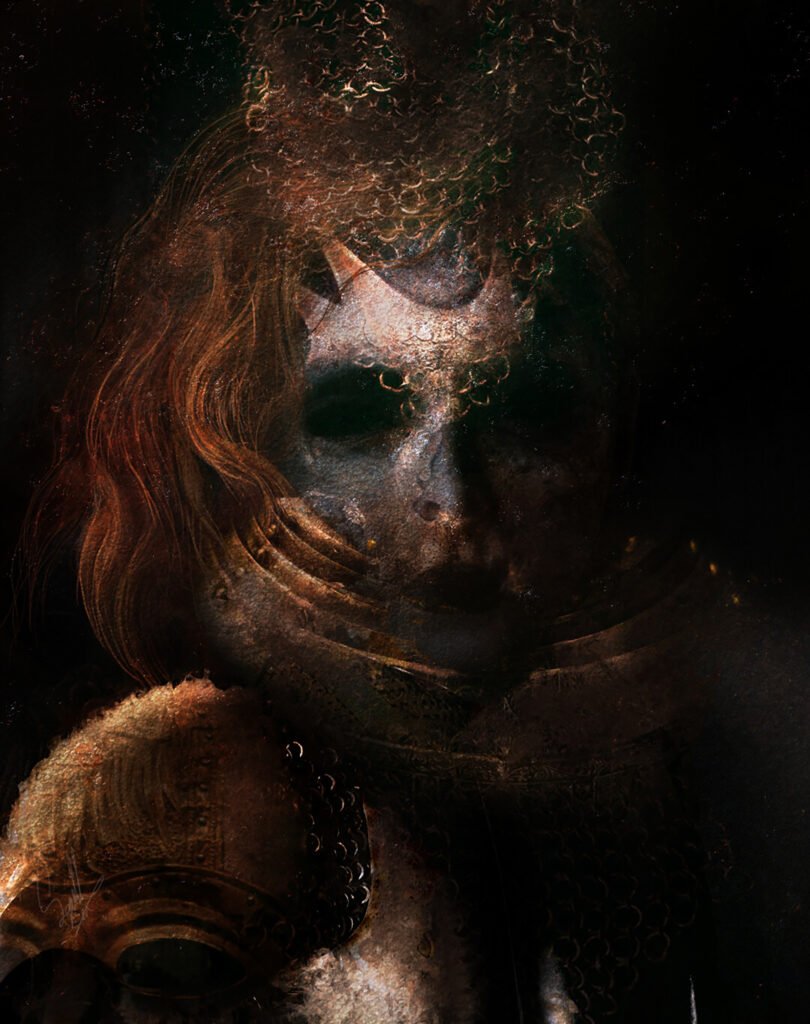
1. How did the initial idea for this series emerge, and what drew you to the face as a site where human experiences are recorded?
Every day, we experience events that evoke a complex range of emotions: suffering, joy, anger, shame, hope, anticipation, longing, emptiness, and many others. Some of these feelings, including suffering, may gradually lessen or recede over time, depending on their nature and intensity. Yet one thing should not be overlooked: time does not always heal wounds or erase their effects.
After experiencing trauma, we never return exactly to who we were before. We may, for a time, forget what happened or think about it less as we become absorbed in the routines of everyday life. Yet its effects remain within us, as though part of the experience has become permanently embedded in our inner being.
The face is where identity, emotion, and time converge in our encounters with others. Through the face, we encounter one aspect of a person’s presence, yet it can never fully reveal their identity or inner world. What we see is only the surface; something of who a person is always remains unknown, concealed beneath it. In this sense, the face becomes a boundary between what can be seen and what can never be fully revealed.
I chose the face, and this particular way of approaching it, to explore that boundary: to make visible, through the face itself, traces of what a person has lived through, and to bring the viewer into an encounter with both outward appearance and inner experience. It is an encounter with truth, stripped of idealization and the assumption that beauty must always be absolute.
I had previously created a series titled HEADS, in which I developed characters within the dark fantasy genre and wrote a short story for each of them. Each character played a significant role in their own world and, in fighting darkness to save themselves and those around them, ultimately lost a part of who they were.
I later continued this series from a more personal perspective—one that, despite its personal nature, does not belong to me alone. What emerges here is an experience that perhaps all of us have encountered at some point, or continue to live with.
2. The faces in this series often exist somewhere between appearance and disappearance, as though they simultaneously seek to be seen and retreat from visibility. What role does this duality play in your understanding of identity and the human experience?
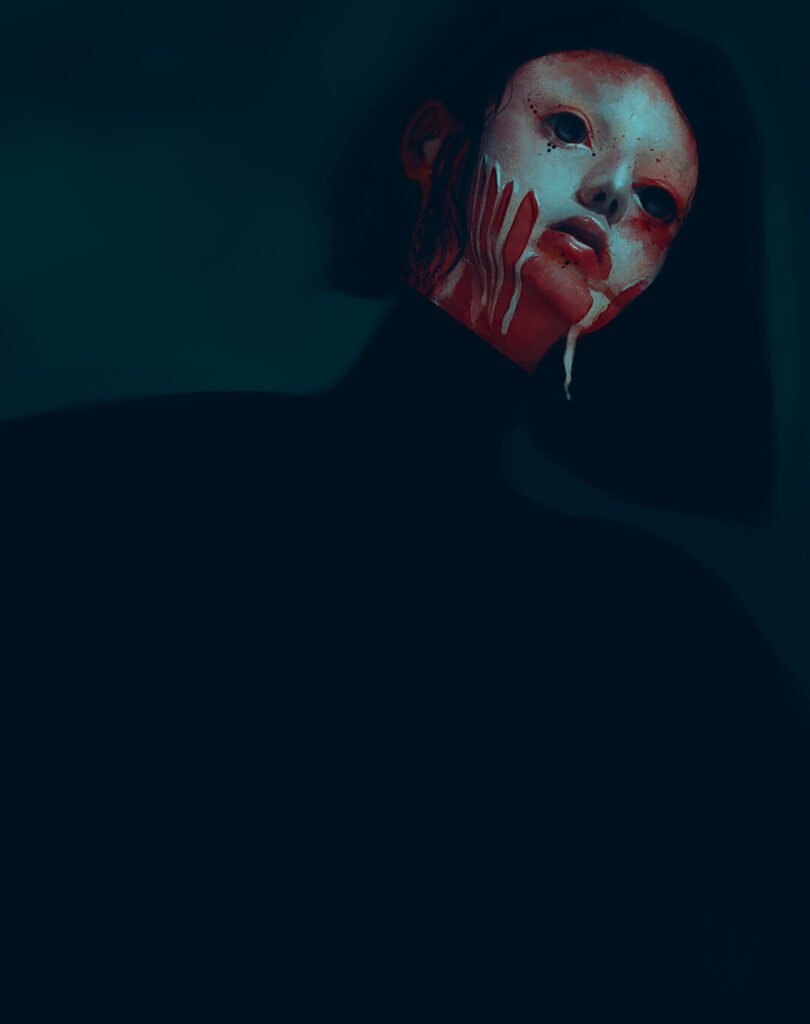
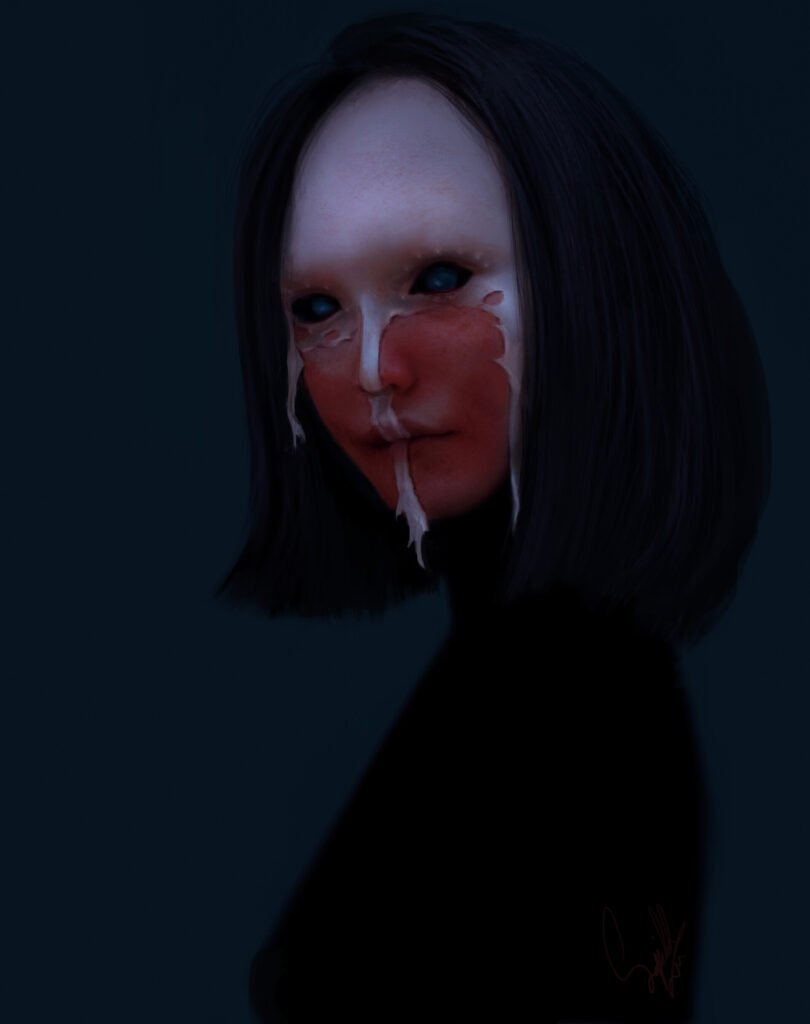
In my view, human beings live constantly between the desire to be seen and the desire to remain hidden. Perhaps this is why the face, for me, is never a completely transparent or definitive image. It can signify presence and absence at the same time.
In this series, appearance and disappearance become expressions of a deeply human condition: we want to be seen, but not necessarily to be fully known. Part of us needs to reveal itself to others, while another part, consciously or unconsciously, holds back from exposure.
From this perspective, identity is neither fixed nor unified. We remember some parts of ourselves, forget others, and keep still others hidden. Memory, forgetting, and lived experience continually reshape how we see ourselves. Perhaps the self takes shape precisely within this distance—in the space between what we reveal and what we conceal.
For me, then, fading does not simply mean disappearance. Rather, it resists the idea that a person can be rendered as a complete and definitive image. The faces seem to seek presence while preserving their right to remain unseen, unknown, and beyond reach. This duality is an inseparable part of the human experience and of identity itself.
3. In many of the works, the faces are not entirely recognizable; at times, they are obscured by layers of darkness, texture, erosion, or distortion. Do these transformations represent a loss of identity, or another way of revealing it?
For me, the transformation of the face signifies neither a loss of identity nor simply its revelation. Rather, it speaks to the process through which identity changes and is reshaped by lived experience.
Each person responds to suffering differently. The intensity and source of that suffering, individual characteristics, and, above all, the passage of time all influence how experiences become embedded within us. We do not necessarily remain the same people we were before. Some experiences may fade from memory, yet their effects can persist in how we see ourselves, others, and the world, sometimes reshaping our very sense of identity.
For this reason, I do not see an eroded face as one that has lost its identity, but as one whose identity is undergoing transformation. The accumulated layers of texture and erosion suggest the traces that time and experience leave behind. Each layer seems to conceal something while revealing something else. What disappears from the surface of the face does not necessarily disappear from the person’s identity. Sometimes, it is precisely through this fading that another aspect of the person begins to emerge.
In this sense, suffering can transform parts of our identity, but it should not become our entire identity. Perhaps the question is not how to eliminate suffering, but how to live with its effects without allowing them to define our entire sense of self.
In this series, then, the erosion of the face represents the simultaneous presence of loss and emergence: something of who a person once was begins to fade, while something else—perhaps more hidden and unfamiliar—starts to take shape.
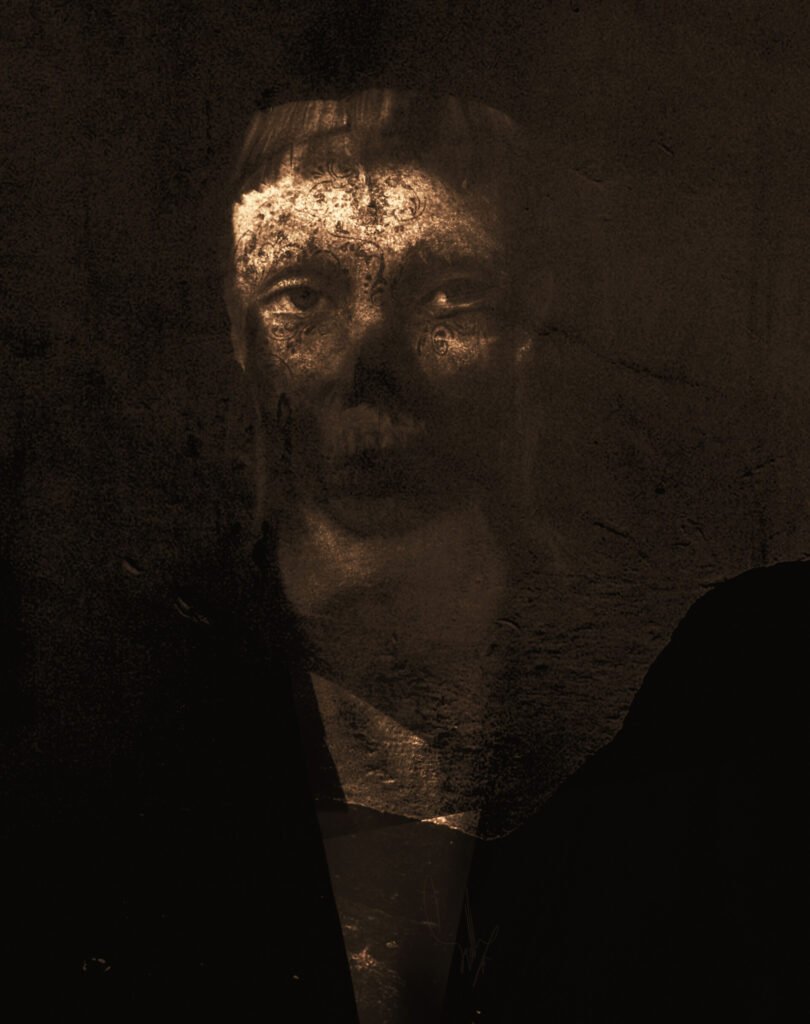
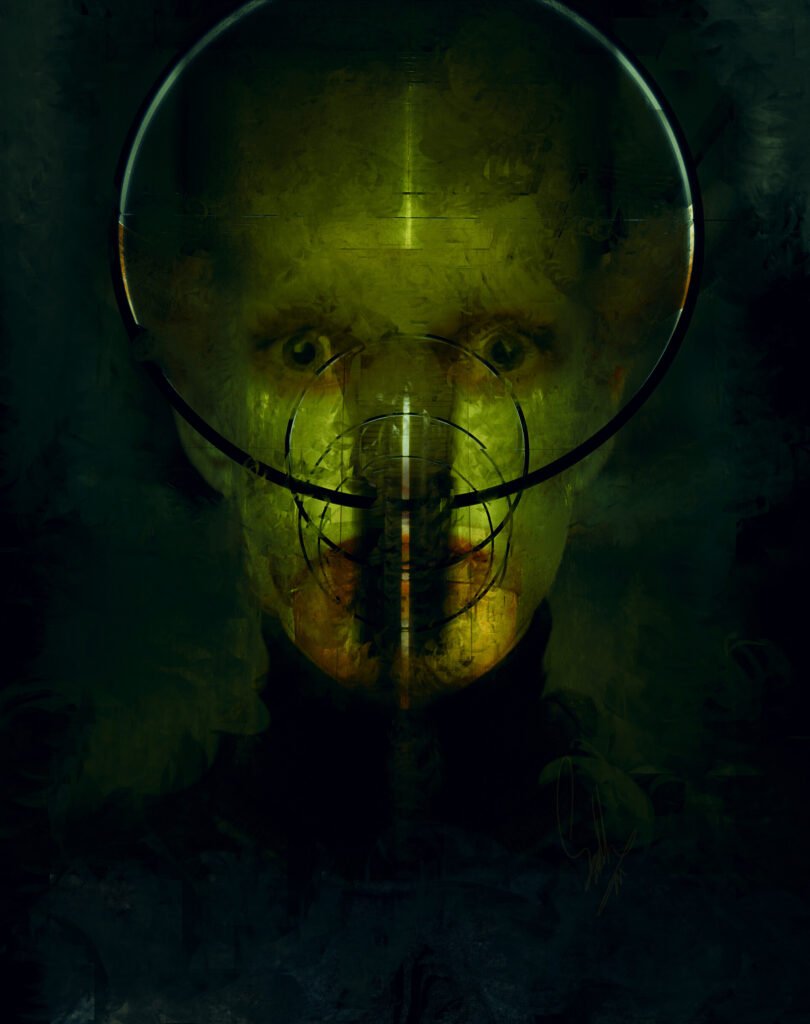
4. Much of the strength of this series comes from the contrast between darkness and areas of light, as well as from the delicacy and detail of the works. Could you tell us about your creative process and visual language? How do you decide which aspects of a face remain visible and which recede into darkness or blur?
For me, the decision to reveal or conceal parts of a face is shaped more by the process of making the work than by any predetermined plan. I rarely know from the outset which areas will remain fully visible and which will recede into darkness or blur. I discover this balance as I work, and sometimes the work itself seems to determine what should remain, what should change, and what should be covered or blurred by subsequent layers.
It is important to me that the gaze and certain details of the face retain the possibility of connecting with the viewer, while other areas may remain unfinished, blurred, or concealed. I feel that these differences in clarity contribute to the character of each work. The face needs to remain recognizable enough for the viewer to connect with it, but not so clearly defined that no room is left for ambiguity.
Light, too, is more than a means of illumination for me. It selects, creates focus, and directs the viewer’s gaze toward particular parts of the face, just as darkness can place certain areas beyond the reach of the eye. The relationship between light and darkness develops throughout the creative process, evolving according to the direction each work takes.
Perhaps the most important part of this process is determining the degree to which the face is visible. If everything is revealed, there is less room for questions and interpretation; if everything recedes into darkness or blur, the possibility of connection is lost. I seek a point between these two extremes: a place where the face is visible enough to establish a connection, yet remains concealed enough for something to be discovered.
For me, the visual language of this series emerges from the encounter between the face and the layers that simultaneously reveal and conceal it. The faces appear within dark spaces, with light bringing only certain parts into view. Texture, erosion, layers of paint, and decorative elements move the faces away from purely realistic representation, giving them a quality that lies somewhere between reality, memory, and imagination.
5. Suffering, loss, silence, and the passage of time are prominent throughout this series, yet the works are not confined to darkness and destruction. What enables human beings to retain their desire to live and carry on in the face of suffering?
I think one of the most fundamental human qualities is the desire to carry on—not merely to remain alive, but to preserve a sense of meaning and the possibility of living, even in the face of what has worn us down.
I believe human beings instinctively seek ways to continue living and to find moments of joy, even if those moments are brief and offer only temporary relief from the realities of life. We do not necessarily remain the same after experiencing suffering. Some experiences transform us, leaving their mark on how we see ourselves, others, and the world.
For me, a wound is not merely a sign of defeat; it is also a sign of survival. Every wound reminds me of something I have endured, while also bearing witness to the fact that I am still here. Perhaps carrying on does not mean returning to the way things were before, but finding a way to live with what has changed us.
Even when suffering and erosion bring us to the brink of disappearance, something within us may remain that refuses to be silenced. For me, this desire to carry on, even in its faintest and most hidden form, is one of the most significant aspects of being human.
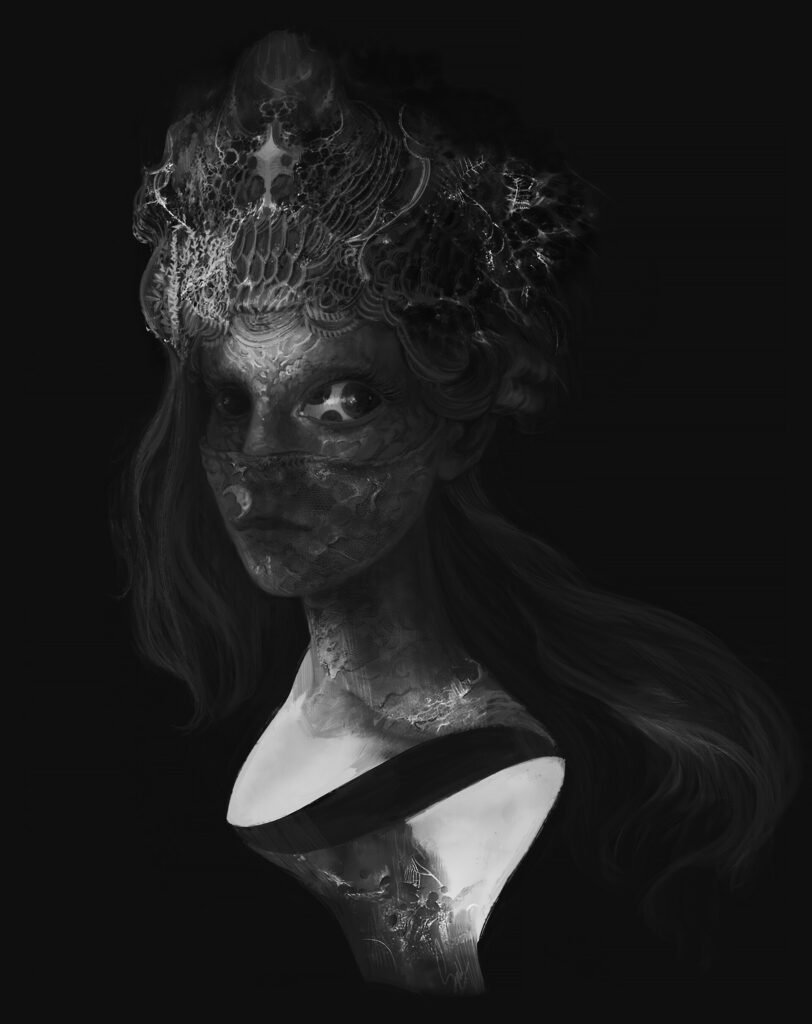
6. In this series, some figures appear with crowns, horns, veils, flowers, jewelry, and exaggerated makeup—elements that sometimes lend their faces a fantastical or ritualistic quality. What role do these elements play in shaping the figures’ identities, and how do they relate to what remains concealed beneath their outward appearance?
For me, these elements are not merely decorative; they are part of each figure’s identity and narrative. Adornment becomes a way of shaping the figures’ appearance and presence, as though each is forming an image of themselves in response to what they have experienced—an image in which they can still recognize something of themselves.
The relationship between outward appearance and what lies beneath it is important to me. What we see does not necessarily reveal the whole truth of a person, just as an adorned appearance does not mean that suffering is absent. The ways people shape their appearance do not necessarily deny what they have been through, nor do they have to allow those experiences to define their entire identity.
From this perspective, these elements are both part of the figures’ identities and a way of engaging with their lived experiences. They give each figure a distinctive presence in which beauty and erosion, revelation and concealment, coexist without either entirely erasing the other.
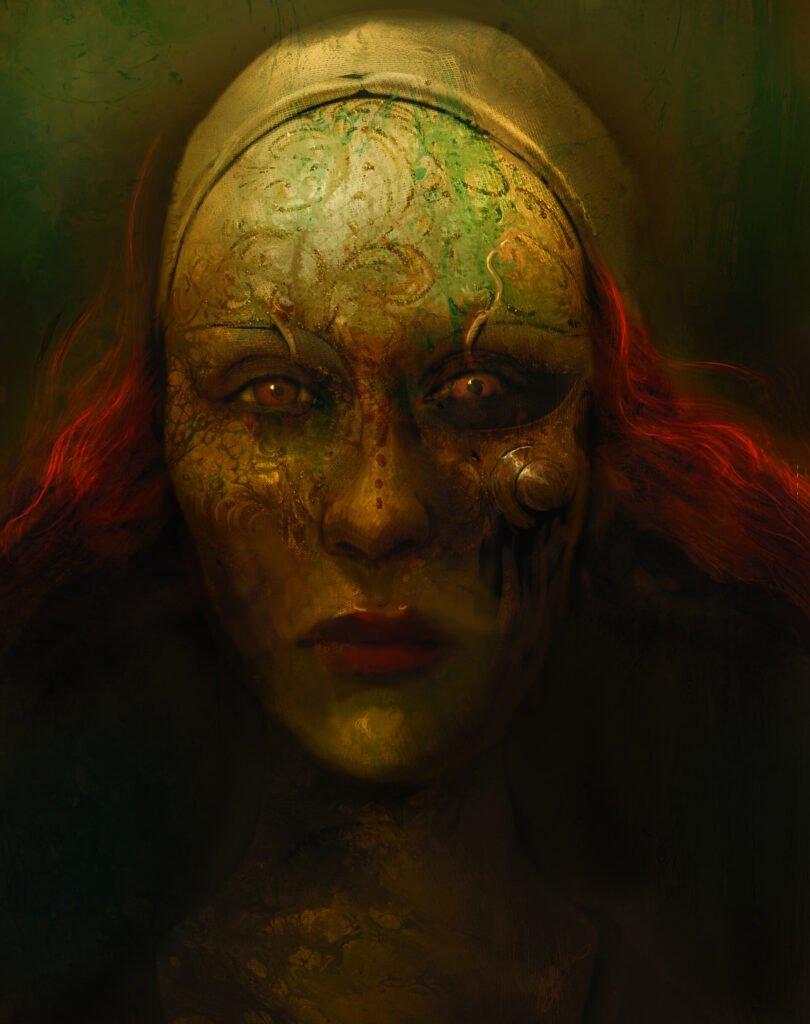
7. The gaze and the eyes hold particular significance in many of these works. Even when much of the face is concealed or transformed, the gaze remains. Why are the eyes and the gaze so important to you, and what do you seek to convey through them?
The eyes in this series seem to search inward, seeking the source of pain, the truth of how it has transformed a person, and the feelings that continue to trouble them from within.
For me, the eye is a window into the inner self and one of the most revealing thresholds between the inner and outer worlds. A face can be adorned, a wound concealed, and layers of beauty placed over it; yet what is happening within cannot always be hidden. Sometimes, what cries out inside a person finds a way to emerge through the eyes before it can be put into words.
Perhaps this is why the gaze remains, even when much of the face has been concealed or transformed in these works. The eyes seem to reach beyond the boundary between the artwork and the viewer, bringing the viewer face to face not only with the suffering these figures have endured, but also with aspects of their own human experience.
In this sense, the gaze is not merely a means of communicating with the viewer; it is an invitation to confront something within oneself. It is as though each eye, without uttering a word, asks:
Do you remember what you have been through?
What you tried to forget, but which remained within you—
not merely as a memory,
but as part of who you are today?
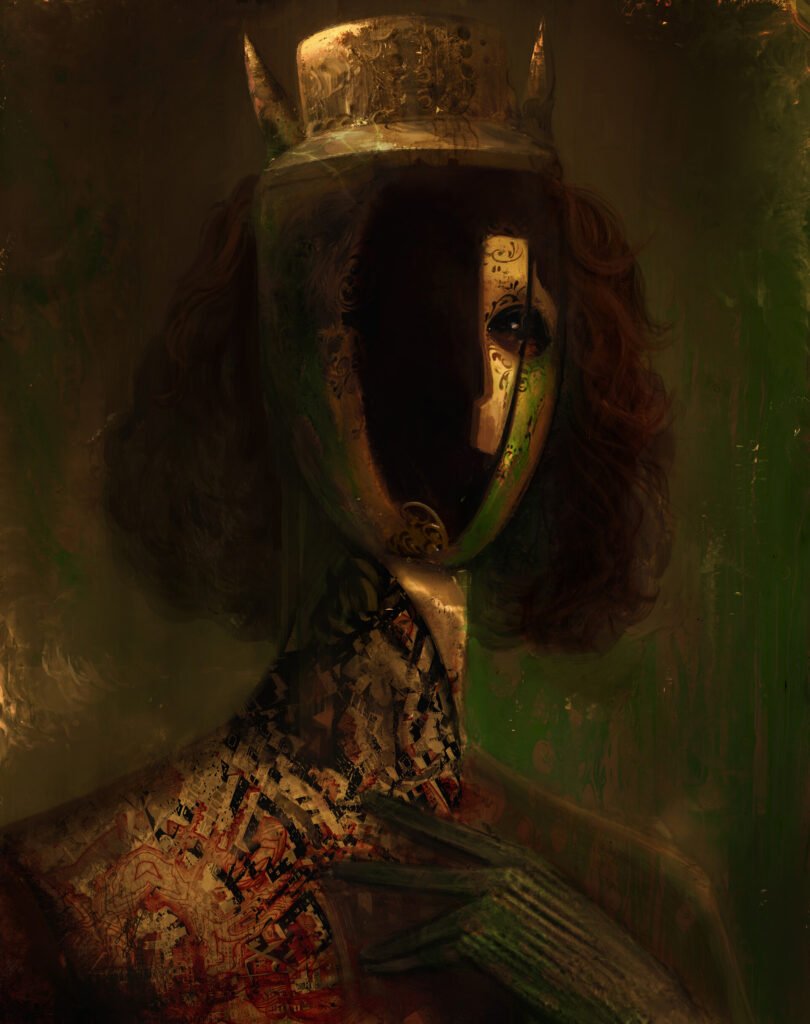
8. Visually, your works move between portraiture, imagined imagery, and transformed human forms. When creating these figures, do you begin with a specific person or character in mind, or do the faces gradually take shape as the work develops?
For me, the faces rarely begin as clearly defined figures with a fully formed image in mind. I have always found it difficult to confine myself entirely to an initial idea or sketch. The work usually takes shape and evolves throughout the creative process, moving from one layer to another and sometimes departing significantly from what I had originally imagined.
This gradual process of formation is very important to me. As each work develops, it finds its own path, as though the material, texture, erosion, and transformation all contribute to the final form of the face, alongside my own decisions. For this reason, what we see in the end is not necessarily what I had in mind at the beginning.
For me, this process is closely connected to the experience of suffering and its effects on human beings. Suffering does not always begin at a single identifiable moment, nor does it remain unchanged. It evolves over time and affects people in different ways. What may initially be an entirely internal experience can gradually manifest itself in a person’s behavior, gaze, body, or even their self-image.
Perhaps this is why I do not want the faces in this series to be confined from the outset to a predetermined, final form. The transformation of a work throughout the creative process is part of its meaning, just as human beings change through their experiences, and their perceptions of themselves and the world are continually reshaped.
9. Your works often bring together beauty and disturbing imagery: the faces can be visually compelling while also appearing wounded, eroded, or transformed. What draws you to this tension, and how does beauty influence the way you approach suffering in your work?
For me, beauty and suffering are not necessarily opposites. Something can be beautiful without being untouched, intact, or free from pain. In fact, there are times when the traces of what a person has endured become inseparable from the way we perceive them.
I am interested in the point at which beauty becomes unsettled—when something draws us closer, yet at the same time makes us uncomfortable. I do not want beauty to soften suffering or make it easier to look at. Rather, I want the two to exist together, without one cancelling out the other.
Perhaps this is also why I am drawn to faces that have been altered, eroded, or partially concealed. Their transformations do not necessarily diminish their presence; sometimes they make that presence more difficult to ignore. What remains visible can attract the viewer, while what has been damaged or obscured resists easy interpretation.
For me, the tension between beauty and suffering is not about making pain beautiful. It is about recognizing that human experience rarely exists in simple, clearly defined forms. Vulnerability can coexist with strength, tenderness with violence, and beauty with damage. I want the works to hold these contradictions without resolving them, allowing the viewer to remain with what is both compelling and difficult to confront.
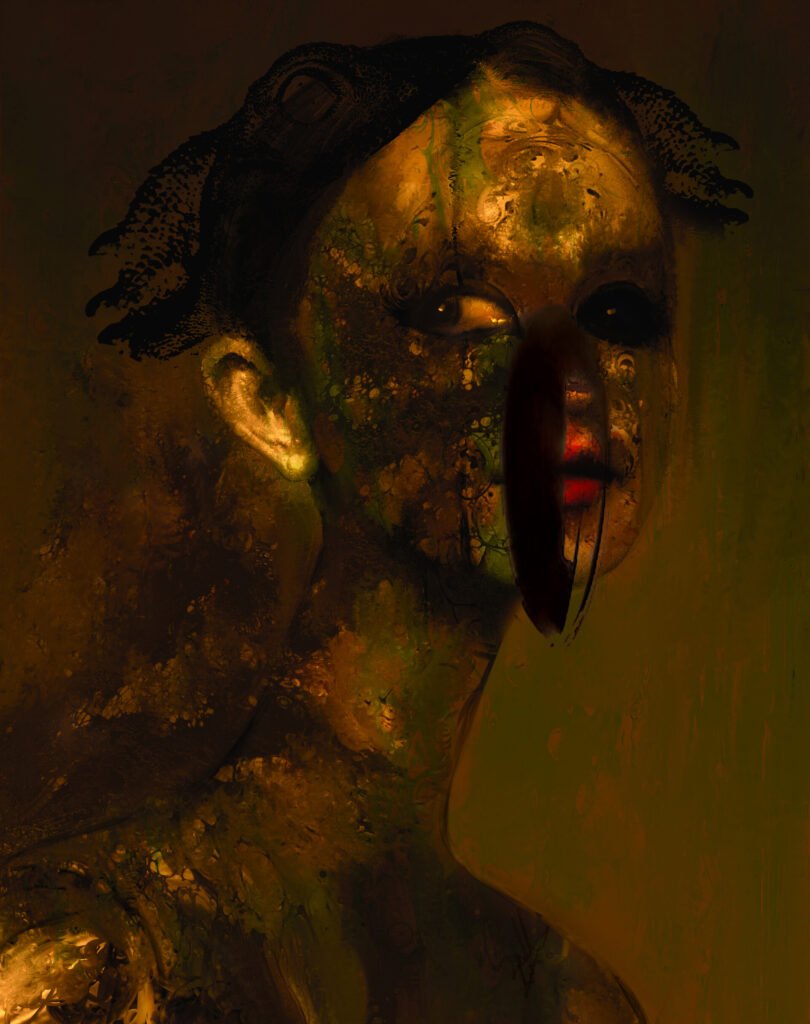
10. If you were to present this series not simply as a collection of portraits, but as a narrative about the human condition, what question or feeling would you want viewers to leave the exhibition with after encountering these faces?
For me, these faces are not merely portraits of individuals who have lived through particular experiences; they can also reflect something of the human experience we all share. For this reason, I would like viewers to gradually move beyond the faces themselves and turn their attention inward.
If I were to share one question arising from this series with the viewer, it might be: “What have the things I’ve been through made of me?”
I do not necessarily want viewers to leave the exhibition feeling pity, or even simply sadness. What matters more to me is that they experience a moment of pause and self-reflection—a moment in which they might recognize something familiar in one of these faces or gazes and begin to think about an experience from their own lives, something they may have distanced themselves from for a long time, yet that continues to shape who they are today.
At the same time, I do not want this series to offer a clear resolution to suffering. Perhaps some forms of suffering have no definitive ending, and perhaps not everything can be fully repaired or changed. Sometimes, life is not about leaving suffering behind, but about continuing to live alongside what remains. Perhaps what we expect to come to an end one day may, in fact, be part of the reality of our lives.
Ultimately, I hope this series leaves viewers with a question rather than a definitive answer. Perhaps, for me, art continues to live on when a work remains in the viewer’s mind long after they have left the gallery.
If, after looking at these faces, viewers find themselves asking, even for a moment, “What has made me the person I am today? And how do I live with the things within me that have yet to change?” then I feel the series has moved beyond the boundaries of portraiture and become a narrative about the human condition.
Interview by Amin S.Najafabadi
Artist Links:
Instagram: Sepideh Taghizadeh