

Benedikte Bjerre is a master at revealing what hides in plain sight. With quiet intelligence and fearless tenderness, she takes the overlooked fragments of our daily lives — the objects, routines, and invisible labors that shape us — and transforms them into works that feel both deeply personal and urgently universal. Her practice is subtle yet piercing, intimate yet unflinching, always guided by a rare clarity: she doesn’t invent truths; she uncovers them, gently removes the dust, and hands them back to us as art. To stand before her work is to suddenly understand something essential about the world we share — and about ourselves. Well, let’s begin the conversation with this extraordinary artist.
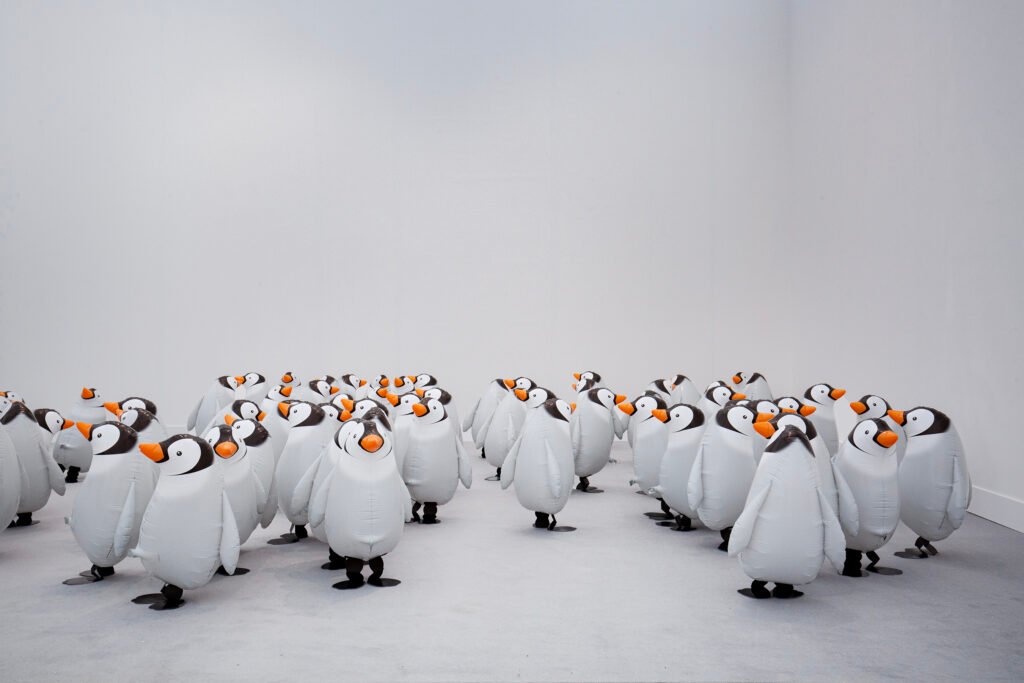
Foil, helium
125 parts Each 40 x Ø30 cm
Installation size variable
Photo: Gabriele Abbruzzese
For those unfamiliar with your practice, how would you describe who you are and what drives your artistic work?
My work deals with sociological phenomena in a sculpture practice which reflect on the current state of society. I have always worked from where I stand, so I don’t dream up imaginative, exciting projects but work with what is already surrounding me both thematically and in terms of material.
Much of your work involves familiar objects reimagined in unfamiliar ways. What draws you to this strategy of transformation?
Accessibility and language. It is easy to get hold of familiar objects, and they contain some feeling, thought, or vibe for most people. And it is unpretentious and direct, which I like.
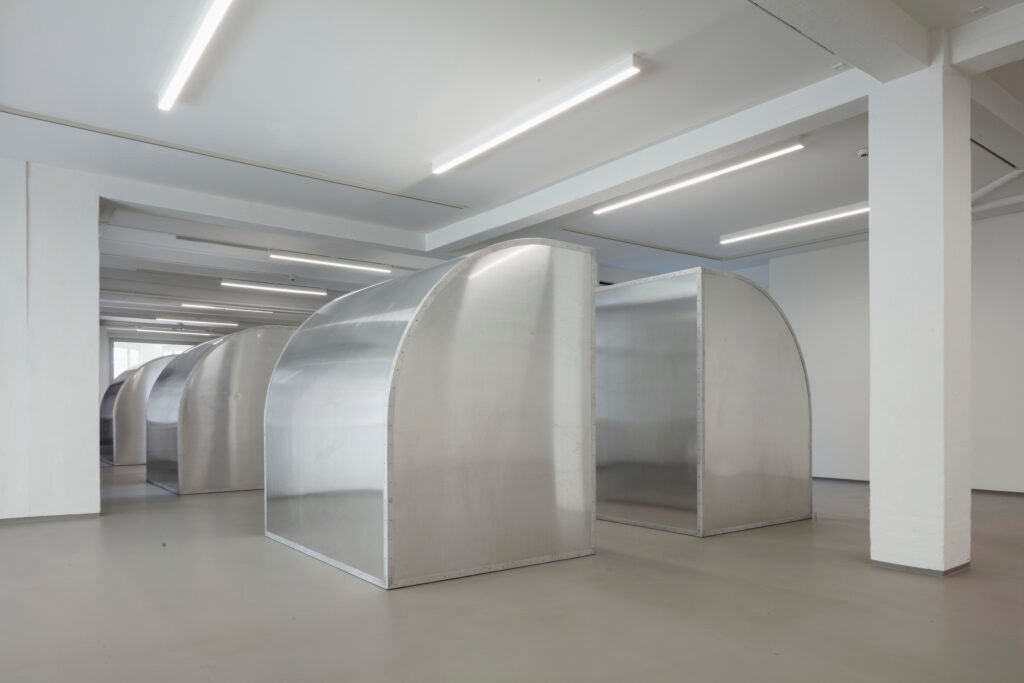
Aluminum, pop rivets
6 parts,
Each 200,5 x 151 x 201 cm
Installation size variable
Your installations often hold a delicate balance between material presence and conceptual depth. How do you navigate that space where form and idea meet?
Thank you. Not easy. I search a lot for sculptural qualities, and I spend a lot of time trying to get my head around what life in the current era is, and often the two processes end up answering each other in the shape of a work.
When selecting materials, do you start from concept or from the physicality of the material itself?
Both or one or the other.
Your work often plays with economic and social symbols. Do you see your art as a form of critique, reflection, or something else entirely?
Expression and reflection, I would say.
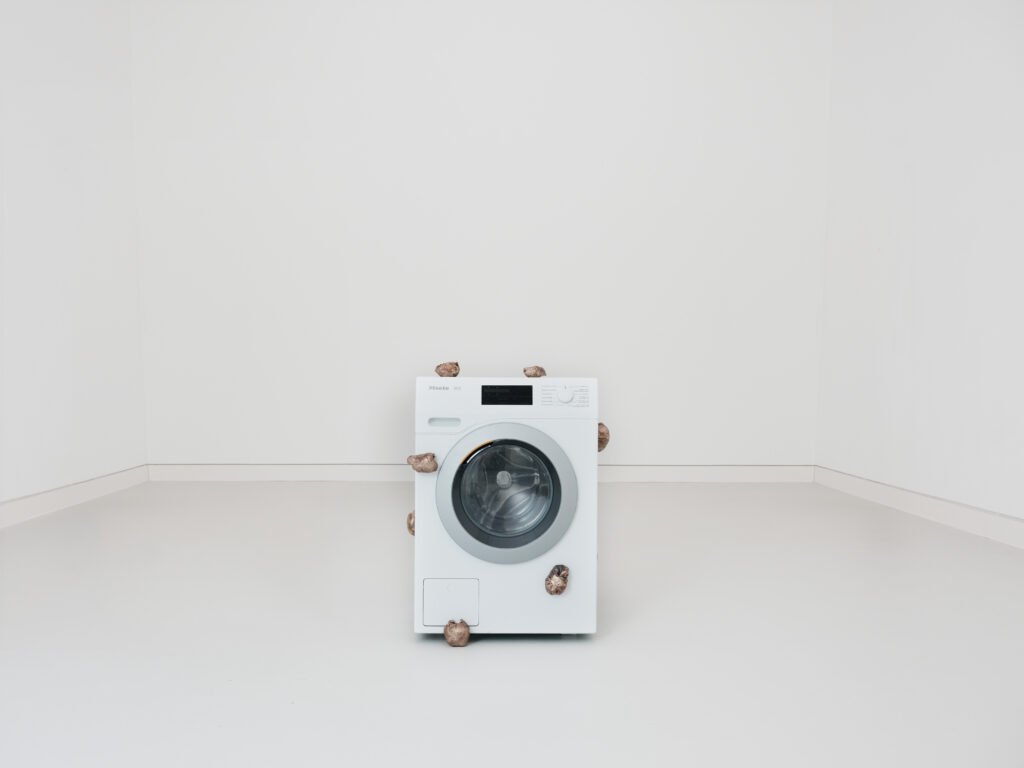
Miele washing machine, direct bronze casts of used newborn babydiapers
90 x 65 x 78 cm
Photo: John Skoog
What role does humor play in your creative process, especially when dealing with complex or loaded themes?
Humor is a relieve both for me and the audience, I think, it makes the experience lighter and brings energy, which somehow allows for me to work light-footed with loaded themes.
Your works are often layered with multiple readings. Do you intentionally guide the viewer’s interpretation, or prefer open ambiguity?
Life is a complex brew. I believe anyone should be able to approach a work of art exactly the way they want and the way they are able to, and still get something out of it. For me, there is no point in having one correct reading, but people tend to have the same variations of readings as I do during the process of making the work.
How do you want viewers to interact with your work—intellectually, emotionally, physically? Or does that question miss the point?
Ideally, all three. If anything, I would wish for my work to be more physical and more emotional.
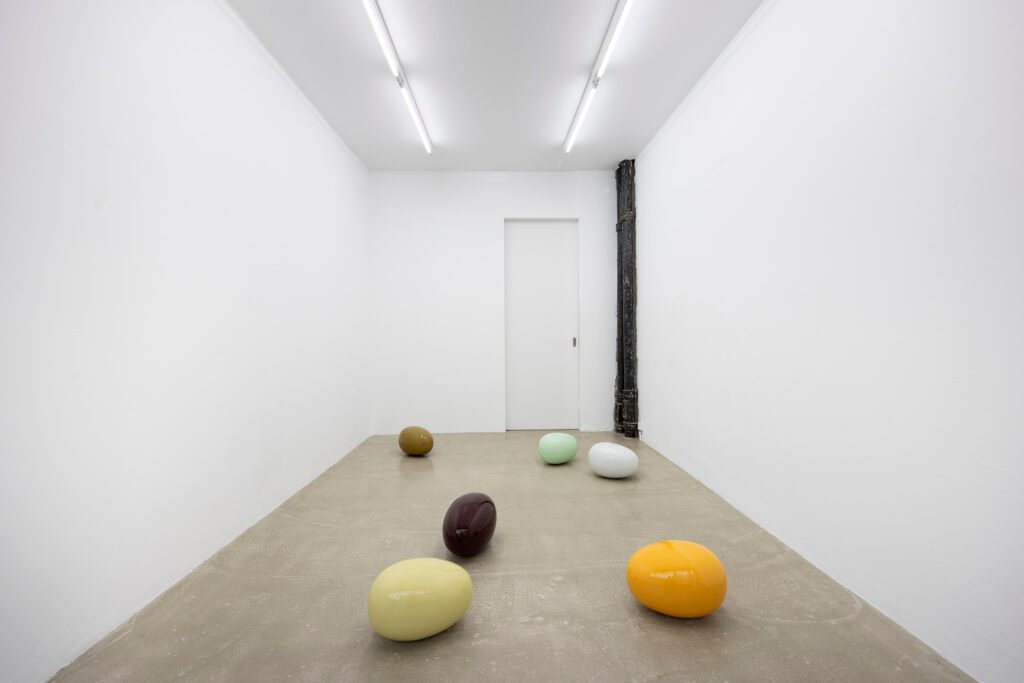
Glass fiber, epoxy paint
7 parts
Each 28 x 40 x 28 cm
Installation size variable
What’s something that continues to surprise you in your own process, even after years of making art?
That it takes such a long time, so much mental energy, and in the end, the work feels like it was always there.
Finally, is there anything you’ve never had the chance to express publicly—an idea, a question, a hesitation—that you’d like to share now?
No, not really.
Connect with Benedikte Bjerre:
Website: Benedikte Bjerre
Interview by Behnam Raeesian
………………….
Curious about what inspires today’s artists?
Farzin Foroutan: Camouflage Through the Lens